

Congress Fights Back Against Biden’s Attacks on Alaska Energy

April 30, 2024

With 63 administrative and executive actions having been ordered against Alaska’s resource development industries since Joe Biden assumed the Presidency, no one can say that the federal administration has ignored the 49th State. Alaskans from across the state have done what they can; testifying at Congressional hearings, writing thousands of letters to the administration and working through local, state and Congressional government officials to amplify the message: No more! And with a piece of Congressional legislation hitting the House floor this week, maybe Alaska will have its voice codified by the Peoples’ House. Sponsored by Minnesota Congressman Pete Stauber (R)…

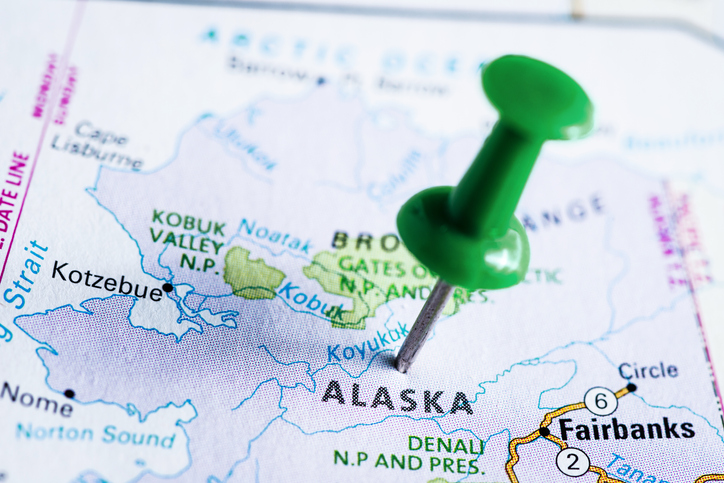

Double-Whammy Friday!  Biden Kills Two Alaska Resource Opportunities

April 19, 2024

Leave it to President Biden to ruin the collective weekends of 725,000 Alaskans looking to enjoy a bright future in the Great Land. This morning, his Department of Interior and its Bureau of Land Management announced actions that – if allowed to stand – will cost thousands of Alaskans new job opportunities, and state and local governments tens of millions in tax and royalty revenues. Between finalizing Interior’s September, 2023 declaration that more than 13 million acres in the National Petroleum Reserve-Alaska would be off-limits to future development, and overriding Congressional approval of the Ambler Access Project and declaring the…


Proposed DOI Rule Will Imperil Alaska North Slope Jobs, Gut Communities

April 12, 2024

13 million acres of federal lands off-limits to development of any kind.  Projects already underway possibly having their access routes shut down.  Untold jobs, revenues and resources stripped away by administrative order. All of it courtesy of the Biden Administration under new rules being handed down within days. Those are the implications of the Department of Interior’s new proposed regulations – made public yesterday – involving the National Petroleum Reserve-Alaska.  Under the guise of saving the planet from a made-up climate crisis, the proposed plans would undercut development plans of some of the nation’s biggest potential fields. Even more egregious,…


A Hearing In Alaska Today Is Sure To Be Full of Hot Air

April 4, 2024

The National Renewable Energy Laboratory (NREL) will be presenting its 2024 study, titled “Achieving an 80% Renewable Portfolio in Alaska’s Railbelt: Cost Analysis” in the Alaska Legislature’s House Special Committee on Energy this morning. The NREL will make the dubious claim that Alaska can – with little risk – achieve an 80% renewable energy mix in Alaska’s Railbelt region by 2040.  That swath of land, nearly 500 miles long, is bordered by Fairbanks in the North and Homer in the South, is home to over 75% of Alaska’s population. NREL’s study authors may be book smart, but they lie somewhere…


Anchorage Assembly Grandstands Over Eklutna Hydro…Again

March 29, 2024

The Anchorage Assembly called a special meeting this past Tuesday afternoon, shoving through a legally-questionable change to the Municipal Charter and giving itself final say over all things related to the Eklutna Hydro project. That project, which provides approximately 6% of Southcentral Alaska’s energy and 90% of Anchorage’s clean water supplies, has its Fish and Wildlife plans up for reauthorization this year.  Power The Future has been a proponent of the owners’ draft mitigation and enhancement plan; a culmination of five years of technical and scientific studies and a compromise between nearly a dozen user groups. The eco-left supported members…


Don’t Believe the Hype!  New Alaska Railbelt Study Doesn’t Pass Scrutiny

March 20, 2024

A recent study from the National Renewable Energy Laboratory (NREL) examined Alaska’s Railbelt, and concluded it would best be served by transitioning to 80% renewable energy by 2040. The study, which has generated immense press from ENGOs and anti-development organizations across the state, concludes that 80% of the grid between Fairbanks to the north and the Kenai Peninsula to the south could be powered by wind and solar, and provide the lowest-cost power. Baloney. Even if utility-grade wind and solar was available throughout Alaska, the simple physics of generating power from those sources during extreme weather makes it a fool’s…


Pebble Fights Back, Files Federal Lawsuits Against EPA Actions

March 15, 2024

This morning, what many had hoped would transpire for months happened.  The company behind the Pebble Project – one of the world’s largest resource development opportunities – filed suits in two federal courts. The first seeks to have the court overturn the EPA’s pre-emptive veto and re-start Pebble’s permitting process. The second, which the Pebble developers say should be held until the first is decided, seeks damages due to the EPA actions’ effectively taking Pebble’s property from the developers and the State of Alaska. In a corresponding press release, Northern Dynasty Minerals’ President and CEO, Ron Thiessen, noted the EPA’s…


You Have to Love the Consistently Inconsistent Messaging from Eco-Left

March 7, 2024

Leave it to the eco-left when it comes to messaging.  They have never been one to keep things factual, nor consistent. Two recent examples of their Jeckyl-and-Hyde approach to storytelling can be found in articles from Wired and the New York Times. While the Times article focused on the benefits of planting and growing trees to combat the (so-called) ‘climate crisis’, Wired raised alarms about the dangers of planting trees in Alaska’s Arctic. What?  One thinks trees are good and one thinks trees are bad?  Apparently, per Wired, the dark green of the trees helps warm the permafrost more than…


REAP Rejected! Ruling Protects Proprietary Consumer Data

March 1, 2024

In a stern rebuke of its eco-left agenda, the Renewable Energy Alaska Project (REAP) saw its demand for proprietary consumer data shot down by the Regulatory Commission of Alaska. This story had picked up media coverage because of its brazen attack on confidential consumer data between utilities and their ratepayers, with stories from the Anchorage Northern Journal to the Washington Free Beacon covering REAP’s demands.  Had REAP succeeded in gaining access to the data, it could have shared per-consumer usage with any number of groups, who could then create “acceptable” per-family carbon footprints, and push utilities to charge more for…